A kit, not a monument.
Curved modules, perforated hubs and joining sleeves form the physical vocabulary. They set the conditions under which different constructions become possible.
ARKHE began with a physical kit of curved parts and connecting hubs. Mk. II investigates how those pieces can be assembled, checked and inspected in a browser.
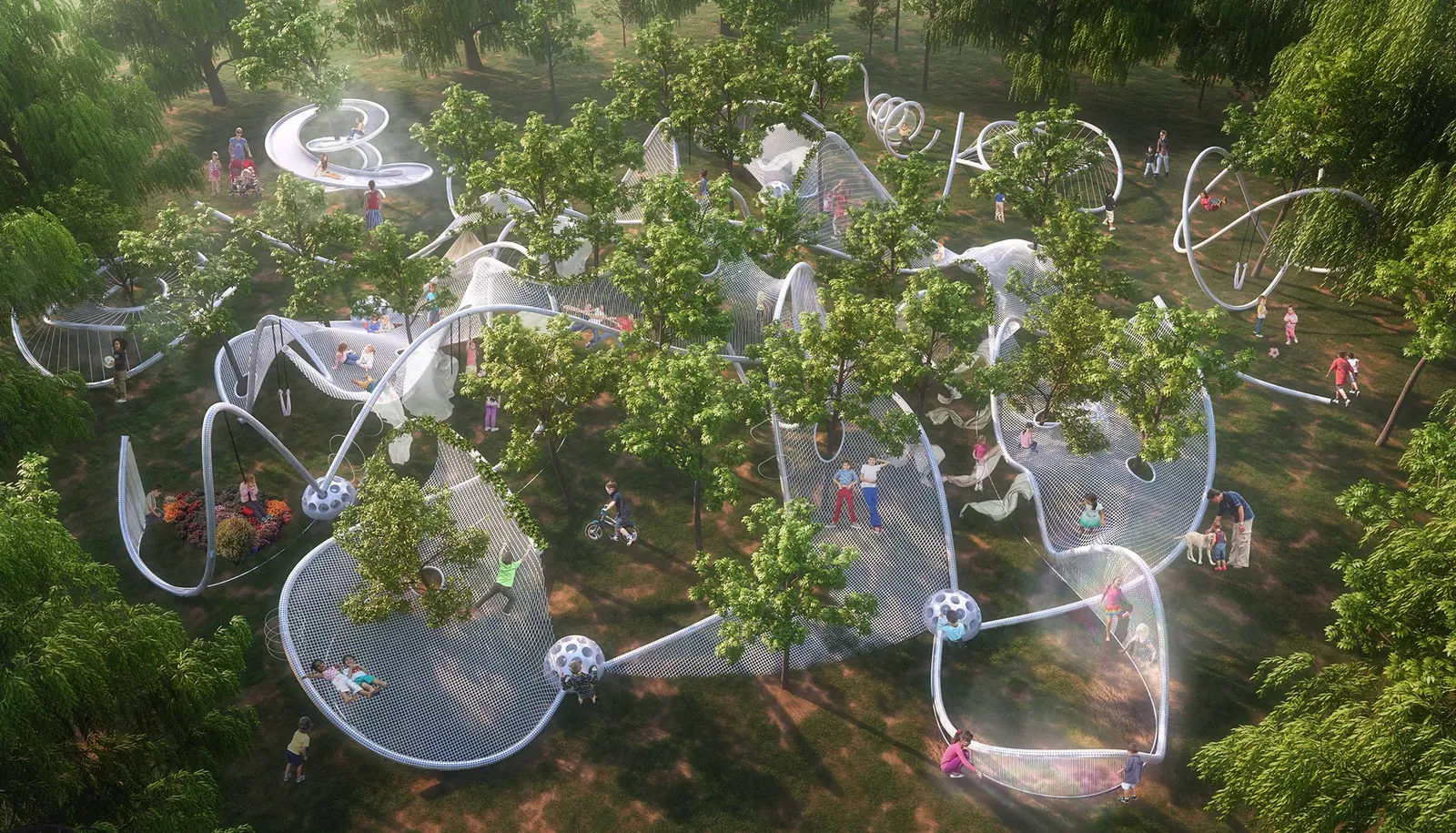
The original proposal treated a playground as a set of connectable parts rather than a fixed sculpture. An arrangement could change with its site; the physical kit remained recognizable.
Curved modules, perforated hubs and joining sleeves form the physical vocabulary. They set the conditions under which different constructions become possible.
The browser experiment explores configurations with source-derived geometry and constraints for sockets, terrain and the available inventory.
The Three.js study lets visitors examine arrangements and assembly sequences, tracing how parts, sockets and terrain relate.
Open the browser study ↗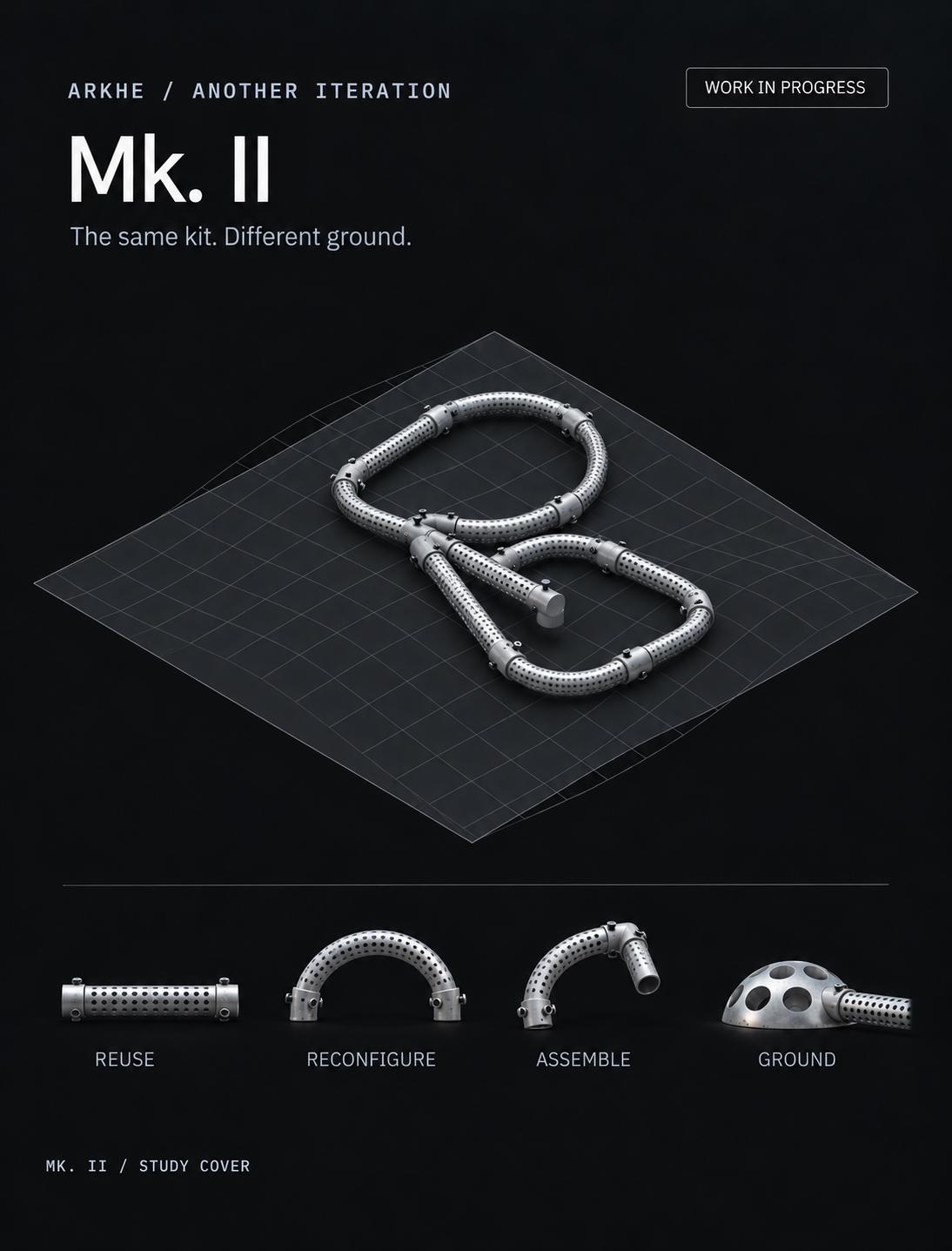
Which sockets and orientations can meet?
Does the arrangement fit the terrain?
Are the needed components in the inventory?
Can assembly be examined and reversed?
The current browser prototype is an experimental continuation. Mechanism details, graph generation, runtime performance and physical verification remain open work.
Original ARKHE design: Ozan Gürsoy and Umut Baykan (design team); Gökalp Yiğit Denktaş and İlayda Akak (assisting team). Mk. II is a separate computational continuation.